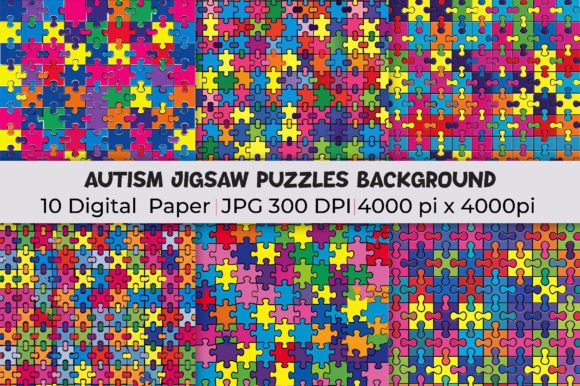
Autism Jigsaw Puzzles Backgrounds: A Dynamic Design Asset
Sometimes, the most powerful design element is one that operates on a deeper level, communicating a concept before a single word is read. The Autism Jigsaw Puzzles Backgrounds collection is precisely that kind of asset. It’s more than just a set of images; it’s a visual language. These backgrounds are a masterful blend of vibrant color and intricate, meaningful structure, offering a modern and sophisticated tool for designers, creators, and brands looking to make a genuine connection.
The Visual Language: More Than Just a Pattern
At first glance, the collection captivates with its energy. We’re talking about a dynamic spectrum of colors, from deep, resonant blues and greens to bright, hopeful yellows and oranges. These hues are not flat or predictable. They blend and bleed into one another, creating a mesmerizing, alcohol-ink-like effect that feels both organic and contemporary. The intricate details within each of the 10 high-resolution images ensure there’s always something new to discover, providing a rich backdrop that adds depth without overwhelming a design.
But the true character of these backgrounds lies in the jigsaw motif itself. The interlocking pieces are a universal symbol of connection, complexity, and the beautiful idea that different parts come together to form a whole. This isn't just a decorative pattern; it’s a narrative. It speaks to themes of community, neurodiversity, problem-solving, and the unique beauty found in every individual piece. This inherent personality makes the collection incredibly versatile, capable of conveying empathy, innovation, and a thoughtful brand identity.
Practical Applications for Modern Creators
So, where do these backgrounds truly shine? Their strength lies in their ability to serve as a powerful, story-driven foundation for a wide range of projects. As a design asset, its value is in its versatility.
- Brand Identity & Marketing: For organizations, non-profits, or educational platforms focused on community, diversity, or mental wellness, these backgrounds are a perfect fit. Use them for website hero sections, social media banners, or presentation slide decks. They immediately establish a brand that is compassionate, modern, and visually engaging. A tech startup focused on collaborative software could also use this to visually represent the idea of connected systems.
- Editorial & Publishing Design: In a magazine layout, a book cover, or a blog post header, an Autism Jigsaw Puzzles Background can set a compelling tone. Imagine a feature article on neurodiversity in the workplace; this background would instantly signal the topic’s importance and modern relevance, adding a layer of visual sophistication to the editorial design.
- Digital & Web Design: As a web design element, it can transform a simple landing page into a memorable experience. Use it to frame testimonials, highlight key services, or as a subtle, textured background for a call-to-action block. Its 4000x4000 pixel resolution means it will remain crisp and clear on even the largest, highest-resolution screens.
- Packaging & Product Design: For a craft product, a puzzle box, or a special-edition item, this background offers a unique and thoughtful aesthetic. It moves beyond generic patterns to tell a story, making the product feel more curated and intentional. This is the kind of detail that elevates a product from simple to special.
Integrating the Asset into Your Workflow
Working with a high-impact background like this requires a bit of strategy. The goal is to let it enhance your message, not compete with it. Here’s how to make the most of this collection.
Pairing with Typography
The intricate, colorful nature of these backgrounds means your typography needs to be chosen carefully. The key is contrast and clarity. A clean sans serif font is often the best choice for headlines and body copy, as its simple forms will stand out against the complex pattern. Think of fonts like Montserrat, Lato, or Poppins. If you need to convey a more classic or elegant tone, a simple serif font with good readability, like Lora or Merriweather, can also work beautifully. Avoid overly decorative script fonts or complex handwritten fonts for primary text, as they can get lost in the details. Instead, use them sparingly for a single, impactful word or monogram.
Creating Visual Hierarchy
To ensure your message is front and center, use the background strategically. Don’t just place text directly on the busiest part of the image. Consider using a semi-transparent overlay—a solid color block or a soft gradient—to create a clear space for your text. This technique is fundamental to good modern typography and allows you to build a strong visual hierarchy, guiding the viewer’s eye exactly where you want it to go.
Evaluating the Right Fit
Before you commit, ask yourself: does the background’s personality align with my project’s message? Its themes of connection and complexity are perfect for many contexts, but it might not be the right fit for a minimalist luxury brand or a rugged outdoor adventure company. The best use of any creative font or background is one that feels authentic to the brand’s core values. This collection is a fantastic tool for the right project, helping to build a consistent and memorable brand identity.
Ultimately, the Autism Jigsaw Puzzles Backgrounds collection is a thoughtfully designed set of design assets. It provides a high-quality, high-resolution foundation for projects that aim to be both visually stunning and conceptually rich. By using it with intention, you can transform your designs from simple layouts into compelling visual narratives that resonate with your audience on a deeper level.