Magical Watercolor Backgrounds: Elevate Your Digital Projects
There is a distinct challenge in modern web design and digital content creation: how do you stand out when everyone has access to the same stock photos and flat color palettes? The answer often lies in texture. Specifically, it lies in the organic, flowing beauty of Magical Watercolor Backgrounds. These assets are not just images; they are atmosphere generators. When you introduce hand-painted elements into a digital environment, you immediately break the sterile barrier between the screen and the viewer. It creates a tactile feeling, a sense of warmth that resonates deeply with audiences ranging from entrepreneurs to crafters.
The appeal of watercolor is timeless. It suggests creativity, softness, and authenticity. However, using them effectively requires more than just slapping a blue wash behind your text. It requires an understanding of visual hierarchy and how these design assets function within a larger brand identity. This collection is curated specifically to bridge that gap, offering high-quality textures that serve as a foundation for professional work.
The Anatomy of the Collection: Quality and Format
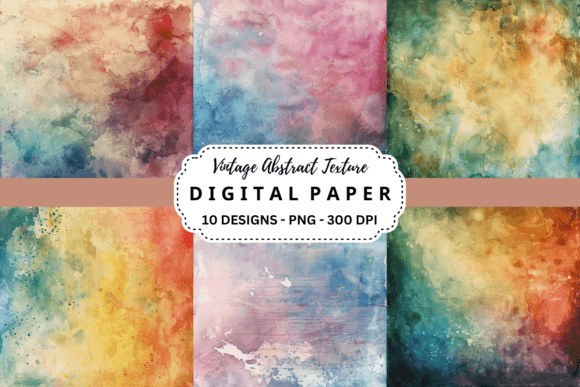
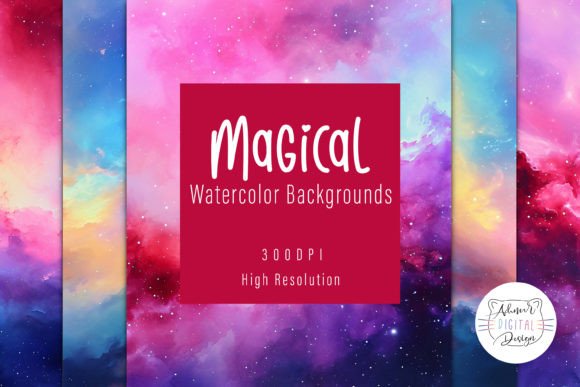
When you are working on a deadline—whether it is for a client’s logo design, an upcoming product launch, or editorial design—file quality is non-negotiable. This package is structured for efficiency and high-end output. You receive a single, organized zipped file containing five distinct graphic elements. Each file is provided in JPEG format, ensuring maximum compatibility across almost every piece of software you might use, from Adobe Photoshop and Illustrator to Canva and Procreate.
The technical specifications are where these assets truly shine for professional use. We are talking about 300 DPI resolution. For the uninitiated, DPI stands for Dots Per Inch. In the world of print, anything below 300 DPI often results in pixelation or blurry images. By offering these backgrounds at this standard, the collection ensures that your work translates seamlessly from screen to physical product. Whether you are printing large-scale signage or detailed packaging design, the integrity of the image remains flawless.
Furthermore, the files are described as "very cleanly." In practical terms, this means the digital artifacts and noise that plague cheaper textures are absent here. You have smooth gradients and distinct brush strokes that don't distract from your foreground content. This cleanliness is vital for maintaining a professional aesthetic, especially when overlaying complex typography or intricate social media graphics.
Integrating Watercolor into Brand Identity
One of the most powerful applications for Magical Watercolor Backgrounds is in the development of a cohesive brand identity. In a market saturated with minimalism and stark corporate designs, watercolor offers a way to inject personality without sacrificing professionalism. It works exceptionally well for brands that want to be perceived as approachable, creative, and human.
Consider the psychology of color and texture. A soft, pastel watercolor wash can make a wellness brand feel calming and trustworthy. A vibrant, splattered watercolor texture can make a creative agency feel energetic and bold. Because you have five different files to work with, you can create a visual system. Perhaps one background is used for your website headers, another for your email newsletter banners, and a third for thank-you cards included in product shipments. This consistency builds recognition. When your audience sees that specific texture, they immediately associate it with your business, strengthening your visual footprint.
Practical Applications Across Industries
The versatility of these backgrounds extends far beyond simple decoration. Here is how different professionals can leverage this specific set of design assets:
- For Publishers and Authors: Use these textures as cover art backgrounds. A watercolor wash can instantly genre-signal a romance novel, a poetry collection, or a children’s book. They also work beautifully as chapter header backgrounds in editorial design.
- For Web Designers: Instead of a solid white background, use a very light opacity watercolor texture to add depth to a landing page. It adds visual interest without increasing page load time significantly, provided the JPEGs are optimized for the web.
- For Small Business Owners: Create mockups for your products. If you sell physical goods, placing them on a textured background often looks more premium than a plain white studio shot. It gives the product context and a "lifestyle" feel.
- For Content Creators: These are perfect for quote graphics, Instagram Stories, or Zoom backgrounds. They provide a professional backdrop that hides messy rooms or boring walls while keeping the focus on you.
Typography and Visual Hierarchy: Making Text Readable
A common pitfall when using textured backgrounds is compromising readability. A beautiful background is useless if it obscures your message. As a general rule in modern typography, the busier the background, the simpler and bolder the font needs to be.
If you are using one of the Magical Watercolor Backgrounds for a poster or a social media post, consider pairing it with a clean sans serif font. The geometric simplicity of sans serif letters creates a pleasing contrast against the organic, irregular shapes of the watercolor. If you are going for a more traditional or elegant look, a heavy serif font can also work, but ensure the background color is distinct enough from the text color to provide high contrast.
Avoid using script fonts or highly detailed handwritten fonts directly over the busiest parts of the watercolor texture. The loops and swirls of the letters can get lost in the brush strokes. Instead, use a technique called "knocking out" or simply place a semi-transparent shape (like a white box or a dark overlay) behind your text. This creates a safe zone for your typography, ensuring your headline pops while the watercolor provides the mood.
Font Pairing Strategies
Effective font pairing is about balance. Since watercolor is inherently artistic and expressive, it pairs well with fonts that have structure.
- The Classic Combo: Pair a textured watercolor background with a premium font that has high legibility. Think of a bold, capitalized sans serif for the headline and a lighter weight for the body text.
- The Artistic Vibe: If your brand uses a script font for its logo, use it sparingly on the watercolor background—perhaps just for the word "Hello" or a signature. Let the watercolor do the heavy lifting for the artistic feel, and keep the supporting text simple.
- The Contrast Play: Use a modern, industrial-looking typeface against a soft, floral watercolor. This juxtaposition of the mechanical and the organic creates a dynamic, contemporary look often seen in high-end packaging design.
Evaluating Fit and Commercial Use
Before integrating any new asset into your workflow, it is wise to evaluate the fit. Don't just download and use; plan your visual strategy. Open the files and look at the color temperature. Do they match your existing brand palette? If your brand colors are cool blues and greys, but the watercolors are warm pinks and oranges, you may need to adjust the hue in your editing software. Fortunately, JPEGs are easy to manipulate in terms of color balance and saturation.
Regarding commercial licensing, it is always best practice to review the terms provided with the download. However, assets like these are typically designed for commercial use, meaning you can use them in projects you sell or in marketing materials for your business. This makes them a cost-effective investment compared to hiring an illustrator to paint custom backgrounds for every single campaign.
Final Recommendations for Implementation
As you begin to work with these files, keep a few best practices in mind to maximize their potential:
- Layering is Key: Don't just use the background flat. Play with blend modes in Photoshop. "Multiply," "Screen," and "Overlay" can create entirely new effects, allowing you to tint the watercolor to match your exact needs.
- Crop for Focus: You don't always need to use the whole image. A close-up crop of a watercolor edge can serve as a beautiful divider on a website or a subtle accent in a brochure.
- Print Testing: Because these are 300 DPI, do a test print on your home printer or with a print-on-demand service. Colors often look different on paper than they do on a backlit screen. Seeing the texture in physical form can give you new ideas for packaging design or stationery.
In the end, Magical Watercolor Backgrounds are more than just pretty pictures; they are tools for connection. They allow marketers, bloggers, and designers