6 Watercolor Beach Backgrounds: A Designer's Escape to Tranquility
Understanding the Aesthetic: More Than Just a Background
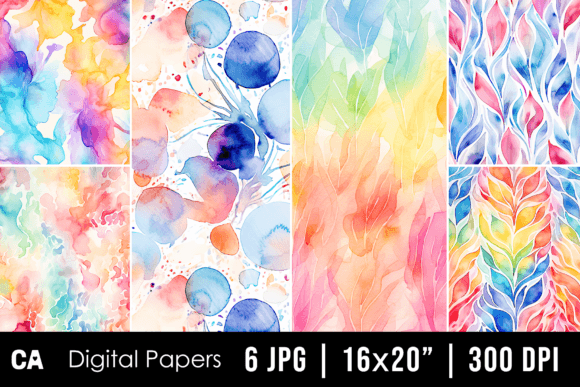
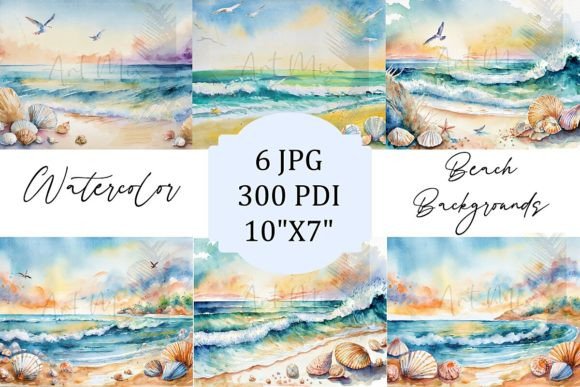
When you first look at the 6 Watercolor Beach Backgrounds, you’re not just seeing a picture of a shore; you are feeling a specific mood. In design, we often talk about the personality of our design assets, and this collection leans heavily into a narrative of serenity and organic softness. Unlike the hard edges of vector graphics or the realism of high-definition photography, watercolor washes offer a unique "happy accident" aesthetic. The blending of cool blues and greens with soft sandy hues mimics the unpredictable flow of pigment on wet paper, creating a texture that feels tactile and warm.
The visual style here is distinctly dreamy. You won’t find sharp contrasts or aggressive shadows. Instead, the appeal lies in the translucency of the layers. The "occasional splash of sunshine" mentioned in the set description is crucial—it provides a focal point of warmth that prevents the cool tones from feeling too sterile or cold. This creates a versatile typeface of background—metaphorically speaking—that can adapt to various emotional needs. Whether you are a scrapbooker looking to preserve a vacation memory or a web designer building a landing page for a spa, the inherent personality of these backgrounds communicates relaxation immediately. It’s a visual exhale for the viewer.
Elevating Digital and Print Presence
The utility of the 6 Watercolor Beach Backgrounds extends far beyond simple decoration. In the realm of brand identity, consistency is king, but distinctiveness is the queen. For entrepreneurs and small business owners in the wellness, travel, or lifestyle sectors, these backgrounds offer a cohesive visual language. Imagine using these washes as the backdrop for social media graphics. On a platform like Instagram, where the scroll speed is rapid, the soft gradients of a watercolor beach stop the eye without overwhelming it. It creates a calming grid aesthetic that reinforces brand values of peace and escape.
For publishers and bloggers, the application in editorial design is significant. A blog header or a newsletter banner often struggles with readability when placed over a busy photograph. These watercolor landscapes, being somewhat abstract, provide "negative space" naturally. They allow for modern typography—whether that is a serif font for elegance or a sans serif font for clarity—to pop without getting lost in the details of the image. This is vital for web design, where user experience relies on the easy scanning of information.
Print and Packaging Nuances
In the physical world, the high-resolution nature of these files (300dpi at 10"x7") makes them practical for packaging design. If you are creating a label for a summer candle line or a seaside soap, the watercolor effect adds a touch of artisanal craftsmanship. It suggests that the product inside is handmade or carefully curated. The texture implies quality. This is where the distinction between a standard stock photo and a curated design asset becomes clear; the watercolor style adds a layer of perceived value to the final product.
Crafters and hobbyists will find these particularly useful for invitations and stationery. The "dreamy style" creates an immediate atmosphere for a destination wedding or a summer event. However, a practical consideration here is the font pairing. Because the background is artistic, your choice of typography needs to balance it. A highly decorative script font might get lost in the brushstrokes, whereas a clean, bold display font or a handwritten font with good weight will maintain readability and visual hierarchy.
Practical Design Guidance: Maximizing Impact and Readability
As a creative professional, integrating these backgrounds into your workflow requires a bit of strategy. It’s not enough to simply drop text on top of the image. You need to consider how the colors interact with your content to maintain professionalism and audience engagement.
- Evaluating Project Fit: These backgrounds work best where the goal is to evoke emotion rather than convey hard data. They are excellent for a "Coming Soon" page or a mood board, but less effective for a dense annual report or a technical manual. Use them where atmosphere drives the brand perception.
- Testing Font Pairings: Because the backgrounds feature "washes of cool blues," consider using high-contrast text. Dark charcoal or deep navy works better than pure black, which can look harsh against soft watercolors. If you are using a premium font for your headers, ensure the weight is heavy enough to sit "on top" of the watercolor texture visually.
- Readability Considerations: If you find the text is getting lost, use the backgrounds as a border or a frame rather than a full-bleed background. Alternatively, place a semi-transparent shape (like a white rounded rectangle with 80% opacity) over the area where text will sit. This grounds your modern typography while still letting the beach aesthetic shine through.
- Licensing and Usage: Always verify the usage rights. For commercial font projects or client work, ensure the license covers the distribution of the final product, whether it’s a physical invitation or a digital template sold on Etsy. High-resolution files are great, but they must be cleared for your specific commercial use.
Ultimately, the 6 Watercolor Beach Backgrounds are a tool for escapism. They allow content creators and marketers